


“The Samizdat Unit was primarily focused on texts, not physical objects, on content, not the information carrier.”
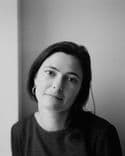
The Blinken OSA Archivum presents a new interview series featuring former Radio Liberty staff from the 1970s–1980s who worked in the Research Department and later in the independent Samizdat Unit. Thanks to their efforts, the Archivum preserves the Samizdat Archives, a unique part of the Radio Free Europe/Radio Liberty Research Institute collection.
Built from materials smuggled across the Iron Curtain, this collection documents the human rights movement and human rights violations in the USSR in the second half of the twentieth century. Many of those featured in the interviews were themselves authors or distributors of samizdat before joining the Radio.
This project opens new ways of understanding and working with the collection, making its rich historical materials more accessible to researchers and the wider public.
Interview with Mario Corti
Conducted by Katerina Belenkina
“The Samizdat Unit was primarily focused on texts, not physical objects, on content, not the information carrier.”
An interview with journalist and historian of the dissident movement Mario Corti, who worked in the Samizdat Unit of Radio Free Europe/Radio Liberty for many years.
Mario Corti served as an analyst and editor in the Samizdat Unit of RFE/RL in Munich from 1979 to 1988, later becoming head of the Unit (1988–1990). He went on to serve as Deputy Director and then Director of the Information Resources Department at the RFE/RL Research Institute (1990–1995), and was Director of Radio Liberty’s Russian Service from 1998 to 2003.
Before you joined the Samizdat Unit at Radio Free Europe/Radio Liberty, you already had a life connected to the world of samizdat. Do you recall the moment you first learned about samizdat, and can you remember the first time you laid hands on samizdat material?
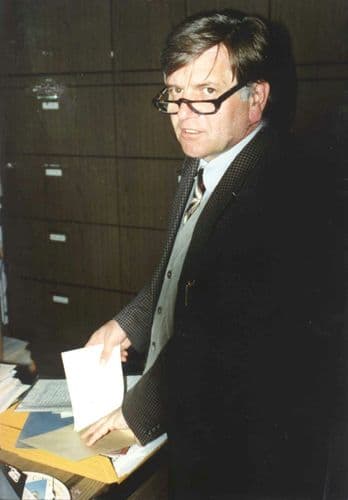
I learned about samizdat almost from the very beginning, as I always followed the émigré press: Russkaya Mysl, Novoe Russkoe Slovo, Vestnik RKhD, Grani, Posev, and others. Around 1969, I went to Munich to Radio Liberty, where I met Peter Dornan, the founder of the Samizdat Unit and its soul. He already showed me bulletins marked AS (AC). In 1972, I moved to Moscow to work at the Italian Embassy, where I not only encountered many documents but also forwarded them to the West.
How did you manage to do this?
Here it is necessary to mention two important things that were organized before my departure for Moscow.
My Italian friend, Professor Paolo Ferloni of the University of Pavia, and I organized a network of recipients in Italy, where I sent materials from Moscow. My friend picked up materials once a week from different addresses in cities in Northern Italy, and then forwarded them to real addresses indicated inside the envelopes, including Valery Chalidze’s Chronicle of Current Events (even the five issues that were published when it was believed that the Chronicle had ceased publication). Many of the materials I sent were personal correspondence or documents, such as diplomas for those planning to emigrate for those planning to emigrate.
Even before my arrival in Moscow, I met an emigrant in Italy, Yuri Glazov. He was a member of the democratic movement (the Human Rights Movement). He gave me a very reliable address in Moscow: that of the orientalist Elena Semeka. It was at her apartment that I met Pavel Litvinov, Naum Korzhavin, Boris Shragin, Alexander Pyatigorsky, Alexander Nekrich, Anatoly Yakobson, Mikhail Meerson-Aksyonov, and others, who often visited Elena. Through them, I expanded my circle of acquaintances. I should mention Vladimir Voinovich, Valentin Turchin, Yuri Orlov, Mikhail Agursky, Felix Svetov, Zoya Krakhmalnikova, Viktor Nekrasov, and Alexander Ginzburg. I once attended Lev Kopelev’s farewell to Pavel Litvinov, when Alexander Galich sang there. At Voinovich’s, I met Andrei Sakharov and Elena Bonner.
Through Mikhail Meerson I entered religious circles and met Alexander Men’, Sergei Zheludkov and others.
How was the process of sending samizdat materials to the West from the USSR organized?
Naturally, I did not have permission from the embassy to do this, nor did I have diplomatic status. However, I had access to diplomatic mail, like any embassy employee, which Soviet authorities had no right to inspect. Every Wednesday was dispatch day; there were large bags at the embassy, and we would place envelopes with addresses and postmarks in them. The Italian Ministry of Foreign Affairs would then send them to their intended destinations. On the outer envelope, I wrote one of the Italian friend’s address.
The personal mail of embassy staff was not checked, as that would have been illegal. However, I sent so much material that it didn't take long for them to figure out what I was doing.
Did your activities provoke a diplomatic scandal?
Yes and no. The embassy received three protests against me from the Soviet authorities in three years. A certain Markov, a doctor of law, a consultant to the Central Committee and the USSR Ministry of Foreign Affairs on legal issues, came to the embassy with the third protest and claimed that a person engaged in anti-Soviet activities was working at the embassy. The ambassador flew to Rome that same evening. The following day, the chargé d'affaires called me and instructed me to fly to Italy the next day.
And how did the previous two protests end?
After each protest, I was called in and told to stop engaging in such activities. But I continued. Since my wife, Elena, had been involved in founding the Italian school at the embassy and was teaching there, she was very much needed and stayed in the USSR for another year after my departure. She continued my work — sending samizdat to the West. Some people at the embassy strongly disapproved of this, while others turned a blind eye. For example, the ambassador’s wife actually helped my wife to send the materials.
How did you end up in the Samizdat Unit of Radio Liberty?
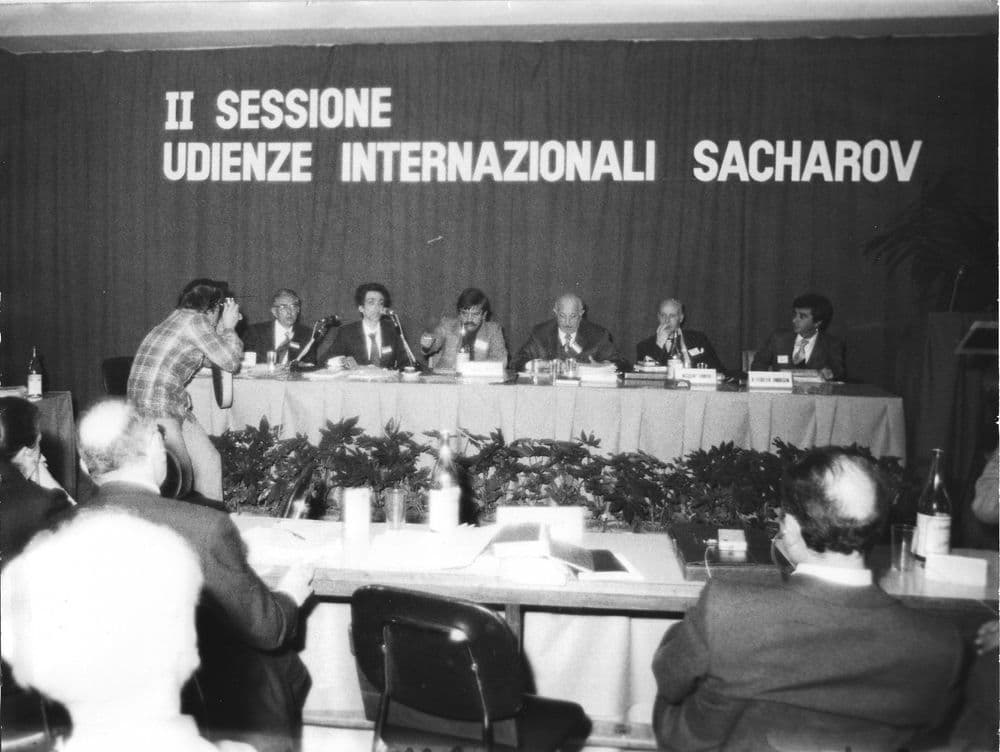
I returned to Italy from the USSR in 1975 after working in Moscow for almost three years. In Italy, I became involved in various activities: I gave public speeches on human rights violations in the USSR, helped organize the Sakharov hearings in Rome in 1977, and curated exhibitions of samizdat documents at the Venice Biennale in 1977 and in Turin in 1978. Turin in 1978.
At the end of 1978, I found myself in a difficult situation, unable to secure a permanent job. It was my wife, Elena, who supported me and our children. I became depressed, and seeing that I was sitting idle, Elena reached out to our friend in Munich, Leonid Finkelstein, who was working for Radio Liberty at the time as the director of the Russian Service. She asked him to help me find a job. He then spoke with Peter Dornan about the possibility. As a result, Dornan invited me to Munich for a short trial period in August 1978, for one or two weeks. At that point, I was willing to take any job, even as a typist. Instead, Dornan hired me as an editor and analyst and quickly made me his right-hand man.
In January 1979, I moved to Munich for a permanent position.
What were your responsibilities in the Samizdat Unit?
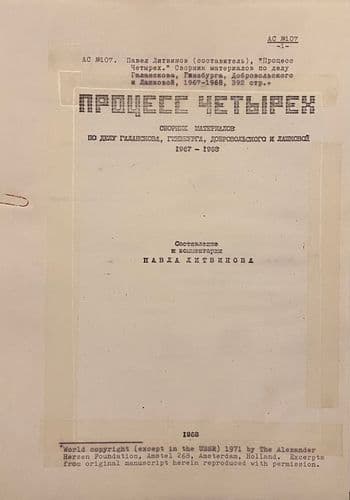
From the very beginning, I did the same as Peter. I published the bulletin Materialy Samizdata and handled all the necessary preparatory work: providing the documents with cross-references and comments, as well as additional information about the topics discussed in them and about the authors and individuals mentioned (such as prisoners, human rights activists, and officials like prosecutors and KGB officers). In some cases, the documents were accompanied by an index of names, and I checked facts, names, titles, and quotations (since Russian-speaking authors often quote from memory, everything had to be carefully verified). The title of each document always contained as much information as possible about its content. This was the guiding principle.
In addition, we offered advice to Radio Liberty editors, Research Department staff, external scholars, and Western journalists on topics related to human rights violations and dissent in the USSR.
Dornan gradually taught me how to search for information and how the structure of the Radio, including its collections like the "Red Archive" and others, was organized. The research departments at that Radio were essential resources for verifying information in our work. Our Unit, along with other departments at the Radio were in close interaction with each other. For instance, the Radio had a specialized Monitoring department, and we regularly used the information it provided.
At the time, the Munich headquarters of Radio Liberty had, I believe, the largest collection of Soviet newspapers and magazines in the world. I don’t think even the CIA had anything like it. That’s why we had a lot of visitors from all over the world.
An important additional task carried out by the Samizdat Unit was the creation of thematic and biographical dossiers, which were supplemented with materials from the global, émigré, and Soviet press and agencies, including recordings of Soviet radio and television broadcasts.
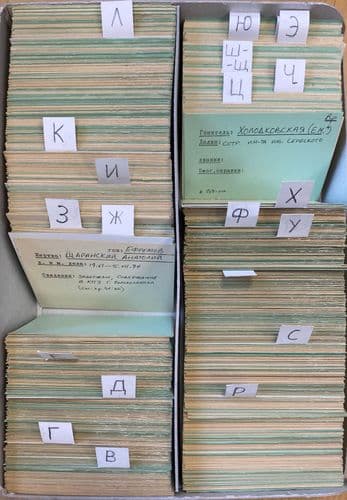
We also created various card indexes, such as name cards, which were updated when compiling name indexes. The card index titled “Victims and Executioners” was created by Peter himself. This was one of the unique contributions of our Unit.
No one in the Samizdat Unit worked as hard as Peter Dornan, with both his diligence and efficiency. Peter was an emotional, sensitive, and generous man, and I liked him very much. However, I couldn’t work day and night the way he did, with such precision and tenacity.
We had only one typist in the Unit, Rima Chianurova. The workload was so heavy that she couldn’t manage it alone, so Peter and I often had to type the documents ourselves.
How many people worked in the Samizdat Unit?
When I started working, there were six of us, including Peter and me. Every summer, Martin Dewhirst, who taught Russian literature at the University of Glasgow, would come for a month to help us. Over time, the team grew to seven, but that was after Peter retired in 1988.
Why was the unit called the 'Samizdat Archives'?
I don’t remember exactly who started calling the Unit ‘the Archive’, but at some point, everyone began using that term, including me. However, itis technically incorrect, as the Samizdat Unit was never an archive and never claimed to be one. There was no formal registration of documents, no cataloging according to archival standards. A folder would arrive, we would select what we thought should be reproduced, and the rest would be set aside. There was no time for this and no specialised archival knowledge.
The main goal was to publish as many samizdat documents as possible. The term 'archive' appears in the acronym 'AS,' which precedes the serial number of the published documents, and this was assigned as the documents were released.
Was Peter Dornan’s main priority human rights or archiving?
When Dornan joined Radio Liberty, he initially worked in the Research Department under Albert Boiter. As samizdat began arriving at the Radio from various sources, some of it went to the Research Department, while some was sent to the Russian Service. Peter, apparently, was deeply motivated by the issue of human rights in the USSR from the very beginning and wanted to dedicate himself fully to it.
The radio staff quickly realized that the airwaves were the most effective means of distributing samizdat in the USSR. The primary goal was to spread samizdat to Soviet residents via radio broadcasts. Many Radio Liberty programs featured samizdat, including Documents of Our Time, Letters and Documents, Documents and People, Human Rights, Review of Samizda, From the Other Shore, and others. A secondary goal was to distribute samizdat in the West through subscriptions.
When Albert Boyter launched and began publishing the Collection of Samizdat Documents (Sobranie documentov samizdata), a serious conflict arose between him and Peter Dornan. The disagreement centered on the inclusion of facsimile reproductions of some documents in the Collection. Dornan strongly opposed this practice, arguing that facsimiles could be used to trace the typewriter on which the original documents were produced. He insisted that samizdat should only be published and distributed in retyped form, and that photocopies of the originals should not be published in the bulletin.
Because of this, Peter Dornan disapproved of the Sobranie documentov samizdata and began to publish the bulletin Materialy Samizdata.
It’s also important to note that Peter discussed with his management and colleagues not only the formation of the Samizdat Unit, but also its independence from the Research Department, as well as from the Russian and other language services. In other words, the Samizdat Unit was shielded from any pressure by researchers or editors of various services on the radio. As a result the Unit was completely independent.
Within the Samizdat Archives collection stored at the Blinken OSA Archivum, in the Unpublished Samizdat section, there are numerous letters and requests for assistance, including requests for help leaving the USSR. Did you ever provide such assistance?
Here, perhaps, I should mention one specific case. A sailor from Riga, Boris Grezin (AS 5246), sent several letters to Radio Liberty. In 1983, one of his letters ended up on the desk of a prosecutor in Riga, marked with the Radio Liberty seal. As a result, he was sentenced to five years in prison based on the letter he had sent to the radio. It's important to clarify that the Radio Liberty stamp was never applied to samizdat documents or to listeners' letters. How did this letter, with the Radio Liberty seal, end up with the prosecutor? It was received by Radio Liberty, but at some point, someone must have affixed the Radio's stamp to it and then sent it to the authorities in Riga. Much later, the circumstances of how this happened became clearer…


