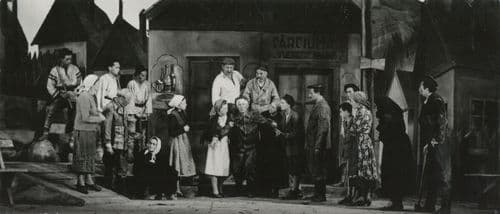
Between Planned Economy and Artistic Creation. Hungarian Theatre in Romania in the Early Years of Socialism

Visegrad Lecture Series
Between Planned Economy and Artistic Creation. Hungarian Theatre in Romania in the Early Years of Socialism
by Eszter Szabó-Reznek, Associate Lecturer, University of Bucharest
In the early years of Romanian state socialism, as industrial planning became the model for organizing cultural life, theatre was often conceptualized as a “factory” of socialist realist cultural production. This research aims to understand the bureaucratization of theatrical life (with a particular focus on Hungarian-language minority institutions) and the theatrical interpretations of work—both as backstage planning and as the intertwined relationship between theatres, workers, and their representation on stage.
Working with sources produced at various institutional levels—from the offices of the Central Committee of the Romanian Workers’ Party to local theatre management, which reveal informal institutional practices—and drawing on documents from the Blinken OSA Archivum, the talk proposes to cross-reference archival materials dispersed across different archives, written in different registers and intended for diverse audiences. These sources not only complement or challenge one another, but also open up new ways of understanding the history of Sovietized theatrical life beyond the official narratives.